Bengal Kitten
Vaccination Schedule
Complete age-wise FVRCP vaccine guide for Bengal Kitten owners in India — breed-specific risks, trusted brands, and expert tips.
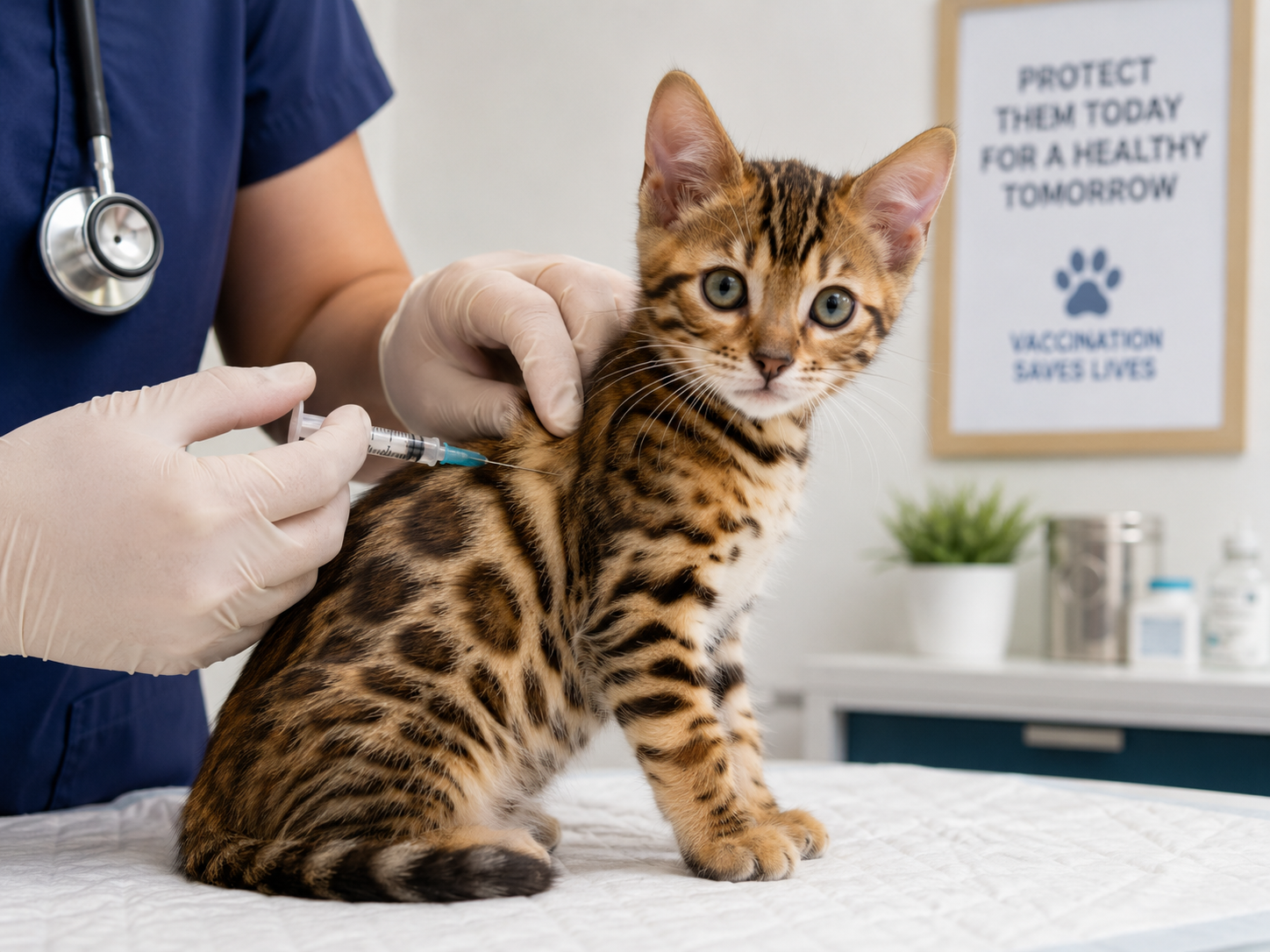
Educational purpose only. This guide is for awareness. Always consult a registered veterinary practitioner for your Bengal Kitten's personalised vaccination plan.
Why Vaccination Matters for Bengal Kittens
Bengal cats are athletic, adventurous, and have strong wild ancestry. Their high energy and tendency toward outdoor exploration means they have elevated exposure to Feline Leukaemia Virus (FeLV) and environmental pathogens compared to fully indoor cats. Feline Panleukopenia (Feline Parvo) is also a critical risk for young Bengals.
Bengal Kitten Vaccination Schedule — Age-wise Chart
| Age | Vaccine | Protection Against |
|---|---|---|
| 6 – 8 Weeks | FVRCP (Tricat) 1st Dose |
Feline Viral Rhinotracheitis (Herpesvirus), Calicivirus, Panleukopenia |
| 10 – 12 Weeks | FVRCP (Tricat) 2nd Dose |
Boosts Rhinotracheitis, Calicivirus, Panleukopenia immunity |
| 12 – 14 Weeks | FVRCP (3rd Dose) + Anti-Rabies Final core dose |
Full FVRCP immunity established; Rabies protection (legally required) |
| 14 – 16 Weeks | FeLV Vaccine Lifestyle vaccine |
Feline Leukaemia Virus — for cats with outdoor access or multi-cat households |
| 1 Year | FVRCP Booster + Anti-Rabies 1-year booster |
Reinforces kitten series immunity; mandatory Rabies booster |
| Annually | Adult Boosters FVRCP + Rabies |
Maintains lifelong immunity against all core feline diseases |
Expert Tip for Bengal Kitten Owners
The FeLV (Feline Leukaemia Virus) vaccine is strongly recommended for Bengal cats who have any outdoor access or contact with cats of unknown vaccination status. Bengals are also more likely to exhibit stress-related illness — a calm vet visit environment is essential to avoid stress-induced immune suppression post-vaccination.
A Note on Non-Adjuvanted Vaccines for Cats
Cats have a rare but documented risk of developing Feline Injection-Site Sarcoma (FISS) — a tumour that can occur at vaccine injection sites. Non-adjuvanted vaccines (such as Purevax by Boehringer Ingelheim) are specifically formulated without aluminium-based adjuvants, reducing this risk. Ask your vet whether a non-adjuvanted option is available and suitable for your Bengal Kitten.
What to Expect at Each Vet Visit
Before the Vaccine
The vet will do a quick physical exam — checking temperature, weight, and general health. Only a healthy kitten should receive a vaccine. Mention any symptoms, recent illnesses, or medications to your vet before the injection.
During Vaccination
The injection takes seconds. Hold your Bengal Kitten gently and speak calmly. Most kittens feel only a brief pinch. The vet will note the vaccine brand, batch number, and date in the vaccination booklet — keep this booklet safe.
After Vaccination (0–24 hrs)
Mild lethargy, reduced appetite, and slight soreness at the injection site are normal for 12–24 hours. Offer fresh water, avoid strenuous play, and keep your Bengal Kitten in a calm, comfortable space for the rest of the day.
When to Call Your Vet
Contact your vet immediately if you notice facial swelling, severe vomiting, difficulty breathing, or collapse. Also monitor the injection site over the following weeks — a persistent lump lasting more than 4 weeks warrants veterinary evaluation.
Bengal Kitten Vaccination FAQs
Looking to Adopt a Bengal Kitten?
Every Bengal Kitten from Nearby Pets India comes with a completed first-dose FVRCP vaccination, health certificate, and vet-verified records.